

Hydraulic diptych and other stories. Some conversations with Frank Westerman
The fluid and evocative poetics by Leonardo Merlini merges with the narrative intensity by the renowned Dutch writer Frank Westerman in a tale, that of their encounters, sailing on the waters of Venice and the Vajont, of Lake Nyos and the Ark of Noah. The large-scale hydraulic works as ports for sailing towards a narration of the contemporary, and of the human attempt to govern its flows.
Leonardo Merlini
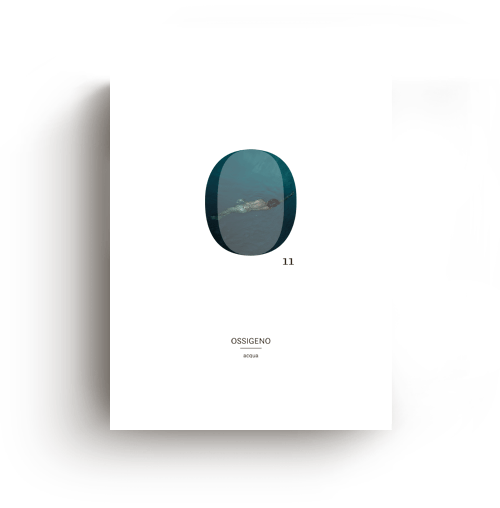
The hotel window overlooks the Lagoon. The first thing I hear, when I open it, is the background sound that in a certain sense defines the essence of Venice: the movement of the waves, the oscillations of the pontoons, the rippling of the boats, some warning sirens. The sky is gray, the water thick like a blanket anxious to hide secrets, someone drags a trolley onto the Riva Schiavoni, hidden by a light yellow umbrella. It rains. It is 8:33 a.m. on November 22, 2022, the tide at 160 cm is expected in just over an hour; an exceptional, dangerous, potentially devastating tide. My daughter is still sleeping sleeping in the next room. The blanket of the Lagoon now looks threatening to me, though still beautiful. The bulletin of the Municipality of Venice informs me that all MOSE lines have been activated. On November 1st, 2021, when the forecast of high water “only” reached 130 cm, the barrier built over many years to the sound of billions and scandals had really contained water and, as the Dutch reporter and writer Frank Westerman wrote, «Moses divided the Adriatic Sea in two». MOSE was working, at least for the big tides, and it worked today too.
Let’s rewind the tape. After all, this is but the end of the story. An end that, despite the wind and the driving rain, has been happy: Venice overcame the crisis without serious consequences, the Acqua Granda has been, to quote the writer Ben Lerner, a storm that never happened thanks to MOSE. But Westerman – one who has made journalism a form of high-level literature and who, on the island of San Servolo, got to know directly the fragile lagoonal reality of the city – told about those times when the storms really arrived, in 2019 in Venice and, with all the horror of an announced tragedy, in Vajont in October 1963. He did it in a small book, Dittico idraulico (transl. Hydraulic Diptych, 2022), released by the Venetian publishing house Wetlands; and he did it through his style of reporter, of investigator in first person of that mysterious thing we call reality. Before continuing to write, I inhale the smell of this moment, which is brackish and humid. I think it’s the right smell to try to move forward, the right smell to let the words gradually overwhelm me like the Lagoon growing, and growing, and growing. Inside me, the sentimental image of it becomes enormous, inescapable. Venice is the city. Venice is water. And this is a story about waters.
Entr’acte #01: large-scale hydraulic works have marked the history of humankind and its civilization. The Roman aqueducts today still stand as a warning in front of my traveller’s eyes, a warning that can also sounds sinister if I think of the theme – indeed, of the hyperobject, in the words of the philosopher Timothy Morton – of climate change. The port of Carthage compared to that of Rotterdam, and its hypercontemporary architecture; the dams on the Nile and the boats of the ancient Egyptians; those lighthouses that stood literally at end of the world, as if they were in Edgar Allan Poe’s head, present as bastions of our involuntary memories.
«Facts are inorganic, they are not alive, they are dead matter. On the other hand, stories are alive», Westerman told me one day in Ferrara. «We must whisper, breathe life into facts», and then, raising his voice, almost as a matter of urgency: «Stories multiply, they change, they evolve. And I’m not talking about the novels, but about the reports, the essays. I don’t invent anything, but as a writer I try to bring facts to life». And facts in this case are intertwined, united by the story of some witnesses, by returning to the places, by trying to reconstruct the different forms of mythology – historical, political, interpretative and even judicial – which are inevitably accompanied by the recomposition of a catastrophic fact such as the collapse of the dam that swept away Longarone, but also of the periodic Venetian floods, that inexhaustible return of the Sea which gradually submerges the city and, with it, our collective imaginary regarding one of the most famous places in the world, known by millions and millions of people. Even though, how many of these really walked on the wooden walkways in Piazza San Marco, during the evenings of high water? How many have actually seen houses flooding or doors disappearing? How many have heard the silence, one moment before the disaster?
«The zero point of high and low water in Venice – Westerman wrote in his story made of two stories, between the Lagoon and Vajont – is the mean sea level, measured in 1897. On the Punta della Salute, at the mouth of the Grand Canal, this tidal zero is indicated with a horizontal line, around which a monitoring station has been built bringing to mind a latrine. Inside, a vertical cylindrical roller slowly turns, covered with squared paper. A mechanical pen, connected to a float in the water, draws the waves of low and high tide to the rhythm of the position of the sun and the moon».
Not much happens in this passage, but it’s nice to hear the voice of the engineer (some say agricultural, others, perhaps under suggestion, even say hydraulic) that Westerman was before becoming, as the flap of the book states, «one of the most important contemporary Dutch writers». A voice with an analytical approach, but also with the posture of the narrator, of the observer. I like to think, as if I was playing identification, also of the reporter. I have often stopped on that Punta in recent years, as a chronicler of art (and of feelings), because from there one has the sensation of embracing the whole city, including its waters, which instead is a more difficult operation compared to other places at sea level. From the altanelle or from the bell towers it is easier, of course, but Venice is its incurable foundations, it is the perspective of those who walk and look at the Canal from zero point (as happens in some Invisible Cities by Italo Calvino). The seaweed that moves, reddish, like the hair of an enormous woman who mysteriously lives under the city, and perhaps holds it up. It is possible that it’s her fury unleashing those stormy moments, favoring the idea of disappearance. Death by water, as T.S. Eliot told in The Waste Land. The Phlebas of the poem was a Phoenician – a pioneer civilization, together with the Roman one, in the matter of large-scale hydraulic engineering works – but he could have easily been Venetian. And Westerman probably would have gone looking for him underwater not so much to have evidence that the character really existed, but rather that we all are, or have been, really alive, at least for some moment, outside of literature. Alive in Venice, this impossible city that we never wanted (or we have never been able, who knows) to understand.
Westerman writes, reworks and moves within the fluid element with the permeability of his prose and his stories. That of November 4, 1966, when the hydrograph marked the record measurement of 194 centimeters above the zero point. Almost two meters more: a climate apocalypse movie-like scenario, more or less. «A strong sirocco wind, in cahoots with manifold celestial bodies, raised the Adriatic sea up to the Campanile lift. Suddenly, with the Campanile ankle-deep in water, all splendour seemed ephemeral. On the flooded docks, the buildings seemed about to be washed away like cardboard boxes. The survival of Venice and its load of traditions once again seemed only a matter of time. The q uays were littered with gutted gondolas, bare shores, like beached carcasses of sea creatures».
Entr’acte #02: spring 2017, Palazzo Grassi. From the large windows on the second floor, all the wonderment proper to the Venetian light enters on a clear day. The blue sculpture by Damien Hirst occupies the whole room: it’s Andromeda and the sea monsters. A shark and a giant water snake with gaping jaws are about to pounce on the young woman chained to the rocks. She turns her head and screams, very loud, forever. A moment before the tragedy is about to take place, that famous moment of silence (it’s still just a sculpture) before the crash. Andromeda carries the features of Tilda Swinton. It seems to me the perfect image to give a concrete dimension to Westerman’s words. Sea creatures that besiege and are about to tear apart the city impossible to exist. And perhaps, forever we will stand on the threshold of an announced, set, perhaps never consumed tragedy.
(One evening, in 2022, while I was wandering around San Marco, lost in the preview days of the Art Biennale, Tilda Swinton actually came out of a door, in front of me. For a moment we met our gazes, then we went in different directions).
Marinetti proclaiming his hatred for Venice as a decadent brothel city, St. Mark’s Campanile suddenly collapsed in 1902, the Liberty Bridge as Mussolini’s middle finger. It all happens in a few pages that always seem about to be overwhelmed by the tide, or by the Vajont mass of water. But, for this time, I want to leave the clearest silhouette in this story to be that of Venice, less tragic, more elusive. «We have to live with traumatic events like a hecatomb in a remote valley – Westerman also told me – and so we create stories». Stories defeating death. Stories possessing the tenacity of the undertow or of Lido’s wooden huts, so provisional as to seem inevitably destined to eternity. A bit like the scream of Andromeda-Tilda in that exhibition of the former angry boy of British contemporary art, so absurd and wonderful and bombastic and grotesque. Pay attention, the four adjectives are also very good to describe another thing: life.
Postscript: a lake in Africa, after the flood.
There are other waters in Frank Westerman’s bibliography, not only the Venetian one, greenish and so loaded with Thomas Mann. There is also Lake Nyos, in Cameroon, around which in 1986, on the night between the 21st to the 22nd of August, suddenly and without any sign of destruction over two thousand people and many animals died. The survivors had pustules and suffered from asphyxiation. Witnesses spoke of an explosion and of the lake water which, from crystal-clear, had suddenly turned red. Westerman went there too, around those science fiction waters, to tell something impossible in f irst person. The lake of non-knowledge, in a sense; a place where, in order to seek the possibility of a truth, it was necessary to swim towards the increasingly dark bottom, while in the opposite direction religious, scientific, anthropological narratives emerged, each in its own way simplifying, each in its own way as true as false. Goffredo Fofi defined that book – L’enigma del lago rosso (transl. The enigma of the red lake, 2015) – «a journey into the confusion of the world and into the babel of the many answers sought and given». All overwhelmed, in the end, by the waters of the Nyos, which kept its secret hidden within it, as sung in Turandot. Ahab sank with Moby Dick, many other human s tories also sank, so that writing tries to save at least their narration. But Frank Westerman – let me conclude by playing the card of a small coup de theatre – is also the author of another memorable geo-historical-political report dedicated to a mountain, the last of mankind, or perhaps the first: that Mount Ararat (2010) which gives the book its title and where Noah’s ark came to rest.
Before us, the Flood.
(When I am about to press the key of the last full stop of this script, I raise my gaze for a little while. I am sitting cross-legged on a stone bench at the Zattere, and now I can see Giudecca and Molino Stucky. At that very moment, all of a sudden, it starts to rain. Please, try to hear that sound).